Wednesday, October 03, 2007

Chess and Aptitudes

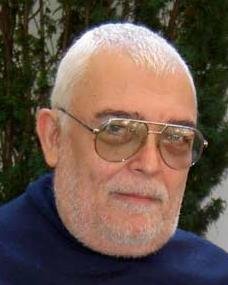
Albert Frank Headshot by Albert Frank

I very briefly introduce you to an experiment that was performed in 1973.

Very often one hears statements such as, "You need to be intelligent to play chess," "Chess fosters intelligence,"… All this is too vague.

In 1973, in co-operation with the Psychology Department of the "Université Nationale du Zaïre" at Kisangani, I undertook an experiment to clarify these issues.

It should be stated that in many countries there is a "Chess Class" taught in primary and secondary schools by the faculty. This makes it extremely difficult to obtain unbiased statistics since there is a general familiarity with chess.

As an initial step, I received permission from the Government of Zaire to alter the curriculum of three classes of the fourth year curriculum for an entire year in a major secondary school of Kisangani. (Belgian school system class denominations are assumed here.) In those three classes, two out of a total of seven hours of mathematics taught per week were replaced by two hours of chess instruction.

There were a total of six classes each with 30 students in the fourth year in this institution. So now they were divided into two groups : The three classes in my "experimental" group (A) ; and the three others in the "control" group (B).

I was allowed to administer the following battery of intelligence related tests:

  • the Belgian version of the G.A.T.B. ("General Aptitude Test Battery")
  • the P.M.A. ("Primary mental abilities" by Thurstone)
  • the D.A.T. ("Differential Aptitude Test" by Bennet, Seashore and Wesman)
  • the D2 (Brieckenkamp)
  • the Rorschach.

Some preliminary remarks should be made before going over to the description of the results of the experiment.

  1. Knowing the degree to which the tests employed were culturally fair to the tested persons is not absolutely necessary, since the aim was merely to compare groups A and B for whom there were no significant cultural differences.

  2. No student in either group had ever even heard of chess, which is a very useful feature. Ideally, there could have been a third group, but you can't have it all!

  3. There were seven hours of instruction weekly (mathematics + chess for group A, exclusively mathematics for group B). The instruction was provided by French speaking teachers — two Belgian teachers for mathematics and myself for chess.

Experiment phases:

  1. At the beginning of the year, all students (A and B groups) were administered the battery of tests described above. Both groups scored approximately the same.

  2. Whereas group B was taught mathematics 7 hours a week, group A was given the same program in five hours a week, and received two hours a week of chess instruction. (Wednesday 11-12 a.m. and Saturday 7-8 a.m..)

  3. Instruction involved testing of subject matter. This included the chess lessons, just like the others mathematics lectures. In group A chess tests and exams accounted for 2/7ths of the usual mathematics curriculum score, and actual mathematics skills accounted for the fractional part, 5/7 of the total score.

  4. At the end of the year, all students of both groups were given the battery of intelligence-related tests again. The students of the experimental group A also took an exam to test the chess level reached. The items of this exam were mostly written by Doctor Max Euwe, former chess world champion and chairman of the F.I.D.E. (Fédération internationale du Jeu d'Echecs).

The results obtained:

Among tested intelligence-related aptitudes, the two groups differed significantly, with the experimental group A scoring significantly better than the control group. The "arithmetic", with a confidence level of 0.95 and "verbal logic" (most often measured by the identification of synonyms or antonyms) with a confidence level of 0.99.

These findings answer some of the questions that were being investigated. But why verbal logic? … There is still no answer.

  1. The experiment also enabled us to answer questions with a view to delineating, by taking the results of the aptitude test into account, the ability to enhance chess performance… but this is beyond the scope of this summary.

  2. The students of both groups received special attention till the end of their secondary studies, i.e. two years after the end of the experiment. The students of the experimental group obtained significantly better results in the long term, both in their mathematics and in their French abilities.

The complete study description is given in the book CHESS AND APTITUDES, Albert Frank, American Chess Foundation, December 1978.

A technical summary (in French) has been published under the title "Aptitudes et apprentissage du jeu d'échecs au Zaïre" in the magazine "Psychopathologie Africaine," 1979, XV, 1, 81-98.

Read More...

Wednesday, September 19, 2007

Working Hours, Machines and Unemployment

Albert Frank Headshot by Albert Frank

Machines such as computers and robots have been conceived to help man, not to give him problems. But, what happens? Currently they are causing unemployment! It is certainly not their fault, but this sad situation requires that we consider an alteration of the present system.

To do a specific task ten hours would have been required thirty years ago (as an example). Now, with the help of machines, five hours are enough. Therefore, for the same productivity, instead of 38 hours per week -- the predominant European standard work week -- only 19 hours are needed. (There will be a few more in total to take into account the maintenance of the machines.) This is magnificent: thanks to machines, it should be possible for people to work only half as long to get the same result. It should be a big success! (We won't digress here on a discussion of the problems of a civilisation of leisure.)

What happens in practice, however? Now we encounter imposed work hours -- the number of hours per week just to "be there" in the office, for instance, or a laboratory -- rather than what must be accomplished. And, thanks to machines, now one man or woman can, during the course of this time interval, produce what would have required two people -- one of the two of whom has lost his job in the name of efficiency! So, machines are now perceived as man's enemies! This perspective may seem simplistic, but there are so many examples: to produce an invoice, sell an airline ticket, print an article, etc..

And it doesn't seem to stop: Competition (with a capital C), the "taboo" of violating work hours to maintain the respect of peers, the fear (!) of being replaced by a machine that is "faster and more efficient". And what about the value of the shares of company stock -- if "we are not 'Number One', then what?" How many people are required for maximum "efficiency" (I don't like this term), if they were allowed to work at their own pace in executing the given tasks?

I will finish by giving an example from my own fond memories: In 1975, I was responsible for the schedules of the National University of Zaire, Campus of Kisangani. The yearly schedule required consideration of a mass of data. (This included lists of those on sabbatical, visiting professors, reorganizations, classroom facilities with class sizes ranging from 20 to 800 students per room, etc.. In one week, I had performed the scheduling of everyone at the university for an entire year. There were a few hundred Professors and students represented and all were satisfied.

When the Chief of Staff of the university and I convened, he said, "Albert, you performed an effort that would 'normally' have taken two months; therefore, I am giving you seven weeks of holiday." Life would be beautiful if it was always -- or at least sometimes -- like that, wouldn't it?

an early blogger
An early blogger.

Read More...

Wednesday, August 29, 2007

Hypermodern Disinformation

Albert Frank Headshot by Albert Frank

We know that the information given to us by the media is dangerous: Any fact can be presented in several ways, in several contexts, and can lead the spectator to different, and sometimes opposite, conclusions.

As an example, pictures of a fire, according to how the pictures are taken, the comments, the context, can lead one to think it’s just a little fire or it’s a real disaster.

Up to a few years ago, the spectator still had the possibility of saying to himself, " I’ll record these images, later I’ll look very carefully at them, and I’ll make an interpretation as near as possible to the reality,… "

Now, a big step (if we can say that) has been taken place: We all know that we have the technical capabilities - it’s possible and easy for a lot of people - to change some parts of a video, or even to fully create one, with anything on it. If it is well done, only specialists would maybe be able to realize the manipulation that has been done (for instance change one person's head with another).

I will only consider the following websites (I have read details there): Dailymotion and Youtube : If anyone accepts the conditions of utilisation (we know them: no incitation to hate, no racism, nothing pedophilic,…), anybody can send them a video, for free…and anyone can see them, also for free..

So, more and more often, we can see/hear affirmations (on any subject), together with " proofs," like this: "Look at the following video," with a reference to a video from one of the two above web sites. A big majority of spectators have no special reaction, they just say, "Here we see the facts, let’s try to understand them properly."

An example that I have seen recently (I am absolutely not into politics): A video "showing" the French President apparently a little drunk after a meeting with the Russian President (True? False? It does not matter. The video is there.)

I consider this new total possible disinformation (and the acceptance of it by most of the people) as a real horror.

Read More...

Tuesday, August 14, 2007

Something Incredible About The A.I. Of Chess Computers

Albert Frank Headshot by Albert Frank

I gave the following position to the best chess software, without their tablebase (which incorporates all positions with maximum six pieces on the board into their consideration).

White (to move) : Kg7, Rb1; h7
Black : Ke6, Ra8; e4

A good chess player (minimum « first category ») will immediately see that 1.Rb5 wins (Black will soon have no valid move) and that the promotion 1. h8Q gives only a draw.

Computers, after two hours (on a 3 Gz Pentium 4 with 1 G° RAM) don’t see the winning move at all, and just stay with 1. h8Q. Thus, they see (or think?) in an incredible poor way.

Once more, these computers are sometimes like “great players, stronger than any human”, and sometimes “absolutely stupid”.

I don’t know if any conclusion can be taken out of this for the moment.

Read More...

Monday, July 30, 2007

Books

Memoir of a Non-Irish Non-Jew book cover
Memoir of a Non-Irish Non-Jew, 99 pages (paperback $999,999.99) by Richard May
What is our identity, if we awaken in the moment?
Memoir of a non-Irish non-Jew isn't about being Irish and Jewish or non-Irish and non-Jewish. It is about the chase of tracking down one's ancestral origins, whatever they may be, and the delightfully quirky unexpected discoveries that await you along the way, no matter what your family origins. "You are a link in the chain of your blood. Be proud of it, it is an honor to be this link," G. I. Gurdjieff. But it's also about learning not to identify with the achievements and failing of one's ancestors or even with one's own carefully crafted persona. "What do I have in common with the Jews? I don't even have anything in common with myself, " Franz Kafka. Who are we? Remembering with awareness of various levels of irony the response of Bodhidharma, the Indian monk who brought Buddhism from India to China, to King Wu's question, "Who are you?" — "I don't know"! What is our identity, if we awaken in the moment from the stories of our lives and the dreams of our culture?
http://www.lulu.com/content/803771

Paradise Emporium cover
Paradise Emporium -- a collection, 247 pages - $9.48
by CL Frost
This newly released collection by a versatile, highly skilled writer and artist includes short stories in the science fiction, fantasy, magical realism and speculative genres. Among these is the short story from which the collection derives its title as well as many fine poems and a huge assortment of visual artistry that also covers a wide variety of genres.
http://www.lulu.com/browse/book_view.php?fCID=561988

Brian Schwartz back cover
World of Villages: A Six-Year Journey Through Africa and Asia, 499 pages - out of print, but used copies are readily available at very reasonable prices.
by Brian Schwartz.
The author traveled with, and stayed among, the native villagers everywhere he traveled throughout Africa, Asia, and Indonesia getting to know the strange behaviors of strange peoples.
Published in 1986 by Random House ISBN: 0517558157
Also published as Travels Through the Third World by Macmillan ISBN: 0283992123
Brian Schwartz also wrote China Off the Beaten Track - How to do it on your own, published by St. Martin's Press ©1983 Library of Congress # 82-61428. Copies of this book are also readily available.

Aberrations of Relativity cover
Aberrations of Relativity, 201 pages - $15.00
by Fred Vaughan
This is a collection of articles that emphasize one the most observable aspects of relative motion, i. e., aberration effects. There are many informative diagrams and illustrations with many new insights. What the author calls "observational relativity" is defined in this book as a possible alternative to Einstein's special theory.
The reader will gain valuable insights into all aspects of relativity including why Einstein considered it necessary to embrace time dilation and length contraction in his special theory, and why that might very well not have been necessary.
The book is written for the intelligent (maybe very intelligent) layman, with little in the way of advanced mathematics required to fully comprehend the discussions.
http://www.lulu.com/content/572819


In Proust's Footsteps, 99 pages (hardcover $22.40)
by Maria Claudia Faverio
"In Proust's Footsteps" is Maria's fifth poetry book after "Entropy", "Behind the Mask", "Metaphors instead of Formulas", and her "Selected Poems" collection. Maria is a committed, award-winning poet whose books are highly recommended by the Poetic Genius Society. Maria is also the current editor for poetry and prose of the International Society for Philosophical Enquiry.
http://www.lulu.com/content/430375

Learn about this talented Australian author, poet, and artist as well as her many creations of prose, poetry, classical music CDs, puzzle books, fairy tales, and artistic images at the following site: http://www.lulu.com/mycreations.


NATAN, 108 pages - $13.69
by Albert Frank and Muriel Hustin
Nath is a genius, Tanguy an idiot. Any such extremes disturb people. In recognition of this fact, a pharmaceutical corporation is undertaking experiment with a new drug, ?normality pills?, that would move them both toward the norm. It is decided to put them in contact using e-mail exchanges. Those responsible for the experiment will monitor the exchanges. So a deep friendship evolves between two individuals who normally would never have even met. Their dialogue is moving right up to the terrifying conclusion. One of the themes of the narrative is the loneliness of the extremes.
http://www.lulu.com/content/71060


Losing Faith in Faith: From Preacher To Atheist, 342 pages - $25.00
by Dan Barker
After 19 years of evangelical preaching, missionizing, evangelism and Christian songwriting, Dan Barker "threw out the bathwater and discovered there is no baby there." Barker describes the intellectual and psychological struggle required to move from fundamentalism to freethought. Sections on biblical morality, the historicity of Jesus, bible contradictions, the unbelievable resurrection, and much more. This book is an arsenal for skeptics and a direct challenge to believers.
http://ffrf.org/shop/books/details.php?cat=fbooks&ID=FB5


The Magic of Ed Rehmus, 192 pages - $15.00
by Ed Rehmus (edited by Fred Vaughan)
This collection of creations by Edward Rehmus includes essays, artwork, poetry, linguistic studies, comics, and puzzles. The style of Ed Rehmus' prose is reminiscent of H. L. Mencken in his hay day. As a friend said of Ed in eulogy, "He went for the bones of what he was considering and the stormy winds could make off with the sails if that was a consequence!" On his own behalf Ed had said, "What indolence and what prodigality to trust to usage that which ought always to be spontaneous, creative and conscious: speech!"
http://www.lulu.com/content/476575 - regular price.

Read More...

Wednesday, July 18, 2007

Some Negative Aspects of Chess Programs

Albert Frank Headshot by Albert Frank

In my previous articles "Computers, chess and A.I.", I have presented some dramatically positive aspects of the best chess software programs concerning a quasi human understanding of the chess positions. Today, on the contrary, I'm going to present some extremely negative aspects, especially concerning the defence of a position.

A "fortress" is a pieces' configuration against which the challenger is unable to do anything, despite a huge material superiority, and that involves a draw.

I will present and comment three fortresses. A beginner, or a weak player, will easily understand all of them.

These three configurations have been analysed for five hours by the following strong chess programs: Rybka (the best chess software existing that can be run on a PC), Fritz (which won a match by 6/4 against the world champion Valdimir Kramnik), and Hiarcs on a 3 GHz PC, with 1 GB of RAM.

All the three softwares continued going round in circles indefinitely, giving a winning evaluation to the side which has the material superiority, without realizing that it was impossible to gain a victory.

We can then make the statement that they didn't display any sign of "intelligence".

Fortress 1: White to move

Fortress 1 chess diagram

It's one of the simplest known fortresses: White, if not in check, will move back-and-forth with his rook from f3 to h3; if he is in check, he will move the king, protecting the g3 pawn. Even a very weak chess player will understand this without difficulty.

We must notice that if this position is given to the Shredder chess software, it will immediately be recognized as a draw, because all the positions with a maximum of 6 pieces are recorded ("hard force").

Fortress 2: Black to move

Fortress 2 chess diagram

This more complex fortress is comprised exclusively of pawns.

How could Black progress?

- The King has no entry into the white position;

- If they push forward their pawn a to a5 and then a4, White will answer by b4;

If they push forward their pawn b to b4, White will answer by a4.

-As long as their rook stays on the h column, The white king will go back and forth between g1 and g2; if their rook goes to the f or g columns, the white king will go back and forth between f2 and g2; if their rook goes to the e column, the white king will go back and forth between f1 and f2.

No progression is possible, and the game will be a draw.

While the position of the fortress 1 was quite simple and let us hope for an eventual solution by the computer without having to resort to a "hard force", the fortress 2 seems to be too difficult for any of such expectation.

Nevertheless even a weak player understands quite easily why Black can not do anything.

Fortress 3: Black to move

Fortress 3 chess diagram

Here is another type of fortress.

The black king has no available square and the h5 pawn is blocked by the king.

Black can only move with his queen: if she stays on the first line, between a1 and d1 or in f1, White answers g3 to mate, winning the game. If he goes on e1, the following move is also g3+, and if he goes on g1 or h1, the white king captures the queen, and Black is stalemated (impossible to make a legal move, and the game is draw). If Black's queen leaves the first line, for example if the queen takes control of the diagonal b8-h2, White will operate back-and-forth with their king between g1 and h1.

Once again, chess programs persist in giving a noticeable advantage to the black position.

A possible improvement concerning these wrong evaluations could be the following:

Add to the program a condition such as "if no improvement is reached after twenty moves - analyse deepness - or in other words if the evaluation function, which will be very positive in the beginning (due to the material advantage), stays unchanged, then tackle the position analysis in another way.

Read More...

Friday, June 08, 2007

Easy or Difficult?

Albert Frank Headshot by Albert Frank

Recently someone gave me the following problem:

On the Xth day of the Yth month of the year 1900+Z in the 20th century, a ship is near New York. The ship has T crew members, U propellers and V chimneys. If we add the cube root of the age of the captain (who is a grandfather) to the product XYZTUV, the result is 698823. What are the values of X, Y, Z, T, U, V, and what is the age of the captain? We also know that only one solution is realistic.

Is this problem difficult or easy? Let’s have a look at it (the solution):

The age of the captain (who is a grandfather) is a perfect cube: It can only be 64 years old.

698823 – 4 = 698819.

Let’s make a decomposition of 698819 into prime factors: 698819 = 11 x 17 x 37 x 101. We have four factors. Six are needed, so the two others are 1 and 1.

11 would be a too big a number for propellers or chimneys, so the ship has 1 propeller and 1 chimney.

The month has to be <13, so it can only be 11.

The day has to be < 32, so can only be 17.

The year (Z) has to be < 100, so can only be 37.

The remaining number 101 is the number of crew members.

We have it: 17th November 1937, 1 propeller, 1 chimney, 101 crew members, and the captain is 64 years old.

Some will find this problem very easy, others will find it very difficult.

Read More...

Friday, June 01, 2007

My Motto: Everybody Does It Is Not A Reason For Doing It

Albert Frank Headshot by Albert Frank

For many years, this has been my motto. I’ll try to explain why.

Already at the age of 10, I often noticed that when people where doing something I considered to be bad and I asked them why, the answer was “Everybody does it”.

From what I have seen (passively, as a witness only or more actively by asking more and more questions), it has nearly always been the same during more than 50 years with very few exceptions, and that is the most incredible part for me.

Of course, my first question was “Who are the exceptions to this?" That has become a horror for me – I’ll be more explicit later. The answer (from what I have seen): some (but certainly not all) chess players in their daily lives and in the way they play chess. There are also some (but certainly not all) “high I.Q.” people.

Before trying to explain my reactions, here are some examples, mainly very common, some historical (after a long search). Some are insignificant, some are horrible:

  • Near a school, with a speed limit of 30 km/h, driving at 50. “Look Albert, I just follow the previous car, everybody does it.”
  • Cheating when playing soccer. “The others do it also, and it is not cheating, it’s only to win.” – This was said to children on a soccer field. It makes me vomit…
  • Cheating at exams at school (or for an i.q. test): “Now, with Internet and technology, everybody does it.”
  • Driving when you are drunk, only a "little bit" of alcohol – 3 glasses of wine and a beer: "Look, everybody does is, so it can’t be dangerous.”
  • We must recognise the authority of all the “big chiefs,” like the Pope or a State President: "Everyone recognizes their authority.” This was of course valid for Hitler too.

At a very young age, I began to be horrified, really horrified, by such things. As an example, I remember when I went to Rome with my father: We saw "Pie 12th" in the “Pope's chair”. My father said, “I’m not catholic, nevertheless there are things which have to be respected and applauded. "Everybody does it," - even if it was not explicitly said… All the “intellectual confidence” I had in my father disappeared then… I entertained ideas of suicide.

My life became worse and worse until it finally stabilised by my recognising the dichotomy: The sheep on the one hand doing and saying only what they could copy, often just what was said in newspapers and on TV. That was the vast majority. I would say more than 95 %, even though they would all probably strongly deny it. Slowly, I recognised that there are two distinct personalities:

  • With this majority of sheep, I made no contact except indispensable practical things. With them I did not speak. I was “alone in my corner”….
  • With the others, "the outsiders”: I loved to speak, to communicate - about nearly everything – I had long conversations… There were several real friendships as a great consequence of this!

Now, I have the opportunity to have quite a few (more than 10) really good "friends" (that’s a big word), and, none of them ever gives the excuse, “Everybody does it."

I have something to add: I have always tried to not be too "severe” with people of low standing (secretaries, for example); at the same time, I have been extremely severe with what I call “pseudo intellectuals” – like "Engineers" or "Ph.D's".

Read More...

Thursday, May 03, 2007

A small experiment on chess and intelligence

by Albert Frank

Albert Frank

During a chess tournament in which I recently participated, I asked fifteen grandmasters and international chess masters the following question: "On a chessboard 6 x 6, what is the minimum number of queens required to dominate all squares except those occupied by the queens, and on which squares must they be placed?"

The time allowed to answer the question was 20 minutes.

This problem is not very easy, but not very difficult.

Additionally, "domination problems" occur often in normal chess games.

The result was unexpected: None of the 15 could solve it.

Once again, this leads to a big question mark with regard to the correlation between "intelligence" and strength at chess.

The comment of some masters was “this is not real chess”. But the same masters are very strong at solving “retro analysis” problems, which are very difficult, but are certainly “not real chess”.

Read More...

Wednesday, April 11, 2007

Chess Column: Ulvestad

Albert Frank Headshot by Albert Frank

In an earlier chess column, I have tried to show that chess is an art form. The surrealistic final position of the game Levitzky - Marshall was a good example. Some readers were enthusiastic about it. So, in this column, I'll show another example of a game with several surrealistic moves, that I won against American Master Olaf Ulvestad.

Olaf Ulvestad
Olaf Ulvestad

Olaf Ulvestad was born in Seattle the 27th of October 1912. But although American by birth, his ancestors originated from Norway. His remarkable entry to the chess scene was at the legendary match, the Soviet Union - USA in Moscow in 1946, where he won one of his two games against David Bronstein (USSR Champion in 1948), winner in 1950 of the Candidates tournament to challenge the World Champion, and in 1951 playing to a tie with Botvinnik in the match for the title of World chess champion - Botvinnik remained champion because a challenger must defeat the champion in order to become champion).

Ulvestad was champion of the State of Washington in 1934, 1952 and 1956.

In the sixties, he went to live in Andorra (a small country between Spain and France), and played first board in the 1970 chess Olympiad in Siegen. As a pedagogue he invented a new method for teaching chess, subdividing the chessboard into several imbricated "sub chessboards". He is also famous for the Ulvestad variation of the Two knights defense: 1. e4 e5 2. Nf3 Nc6 3. Bc4 Nf6 4. Ng5 d5 5. exd5 b5

He died in 2000.

Here is the game. It is technically complicated and the comments will only concern the surrealistic moves. (The time control was 45 moves in two hours 15 minutes, thus, 20 moves per hour):

Olaf Ulvestad - Albert Frank, Berga 1971

Chess diagram 1
Diagram #1

Chess diagram 2
Diagram #2

Chess diagram 3
Diagram #3

Chess diagram 4
Diagram #4

1.d4 Nf6 2.c4 e6 3.Nf3 c5 4.d5 ed 5.cd d6 6.Nc3 g6 7.Nd2 a6 8.a4 b6 9.e4 Bg7 10.Nc4 0-0 11.Bg5 h6?! 12.Bh4 Ra7 13.Bd3 Rb7 14.Ne3 Re8 15.0-0 Qd7!! (See diagram #1.)
An incredible move: The knight on b8 has only the square d7 to go, the Bishop on c8 can only move on the diagonal c8 - h3, and the queen move blocks both!
16.Qe2 Ng4 17.Nxg4 Qxg4 18.Qxg4 Bxg4 19.Bg3 Bf8 20.f4 Bd7! (See diagram #2.)
Once more, the only available square for the Knight on b8 is occupied. 21.e5 b5 22. ab? Bxb5 23. Bxb5 ab 24. Ra8 f5 25. Re1 b4 26. Nb1 c4 27. Rc1 Rc8 28. Nd2 c3 29. bc bc 30. Nf3 c2 31. Nd2 de 32. fe (See diagram #3.)
I have given two connected passed central pawns to white, and white's position is now very difficult.
Bb4 33. Nf3 Bc5+ 34. Kf1 Be3 35. Raa1 Bxc1 36. Rxc1 Rb1 37. Bf4 g5 38. Bd2 Rc5 39. d6 g4 40. Ne1 Rxc1 41. Bxc1 Rxe5 42. Bxh6 Rc5 43. Bc1 Rd5 44. Ke2 Rd1 45. Nd3 Kf7 46. Bf4 Nc6. (See diagram #4.)
The knight from b8 comes finally into play.

Here Ulvestad resigned, saying "You develop the knight, so it's over", and we became big friends.

Read More...

Monday, April 02, 2007

Chess Column: Robert (Bobby) Fischer vs. Robert Byrne

Albert Frank Headshot by Albert Frank

Bobby Fischer and Robert Byrne
Robert (Bobby) Fischer, Robert Byrne

I'll present today a game that's considered to be one of the best chess games ever played. (There are about 20 games which could be considered as "the best" — this one has a particularity that we will see.) It was played at the 1963 — 1964 US Championship, between Grandmasters (GMs) Robert Byrne (with white) and Robert Fischer.

Robert E. Byrne (born April 20, 1928) is a leading player, who won the U.S. Championship in 1972. He is the chess columnist for the New York Times.

Robert Byrne and his younger brother Donald (who was also International Master and a member of the US team at some chess Olympiads) grew up in New York and were among the "Collins Kids," promising young players who benefited from the instruction and encouragement of John W. Collins.

Byrne became an International Master based on his results at the 1952 Chess Olympiad at Helsinki (silver medal on third board). In that same year he graduated from Yale University. He went on to become a professor of philosophy at the University of Indiana, and his academic career left him little time for chess.

In 1960, Byrne returned to serious play, winning the U.S. Open and taking a gold medal on third board at the Olympiad in Leipzig. In 1964, his third-place finish at the Buenos Aires tournament made him an International Grandmaster. By the late 1960s, he was playing chess professionally. He went on to other tournament successes, notably a third place at the Leningrad Interzonal in 1973, which made him only the third American (after Bobby Fischer and Pal Benko) to qualify for the Candidates tournament (part of the world chess championship process).

Since 1972, when he became the columnist for the Times, he has been less active as a player. He did, nevertheless, win tournaments at Torremolinos, Harare, and Lagos. He has also been a frequent contributor to Chess Life magazine, the publication of the United States Chess Federation (USCF). He has chaired USCF's committee on masters' affairs and been one of its vice presidents.

He was inducted into the Chess Hall of Fame in 1994..


Robert (Bobby) Fischer was born in Chicago, on March 9, 1943. His parents were divorced in 1945, and his mother moved him and his sister to Brooklyn, NY about a year later. The story goes that his sister bought him a chess set for his sixth birthday and soon he was consumed with the game. He was a very competitive child, a trait that only increased with age.

At the age of thirteen he beat International Master Donald Byrne (the brother of Robert) in what many have called the "Game of the Century". That game won the brilliancy prize for the year and put the name of Bobby Fischer on the lips of chess players from New York City to Los Angeles to Moscow at the tender age of 13. When he was fourteen he won the 1957 US Junior Championship and then won the open 1957 US Championship. Fischer became the youngest Grandmaster in the history of chess at age 15. On January 1, 1964, Bobby Fischer won the U.S. 1963 — 1964 Championship with a perfect score of 11 wins (usually, at this very high level, the winner scores around 70 to 75%, as did Kasparov in the Russia championship 2005). In 1971 at the age of 28 in his march to the World Championship match he dispatched, first Grandmaster Mark Taimanov and next Grandmaster Bent Larsen, both 6-0. Those matches coming on the heels of the Candidates Interzonal tournament in Palma De Mallorca finished off a string of twenty straight victories vs. Grandmasters, a display unprecedented in the annals of the modern championship. Former world champion Tigran Petrosian awaited him next. He gave Fischer more of a fight, posting one win and three draws before losing the match 6.5 — 2.5. Who'd be his next victim? That would be Boris Spassky, of course. Fischer won the match by a score of 12.5 — 8.5 and became World chess champion on August 31, 1972.

In 1975, he did not play a match against the new incredible talent Anatoly Karpov. (The top experts gave both an even chance to win this match. A few months before the foreseen match, ex World champion Max Euwe told me in Amsterdam "Karpov is so well prepared to play against Fischer that it is impossible to make any prognostication.) Karpov lost his title without playing.

Fischer also invented "Randomchess", in which the initial position of a game is randomly chosen (with a lot of constraints of course), with the idea of diminishing the preparation importance of the Grandmasters. It is to be noted here that the top computers (which have now reached a level very near that of the best players of the world) play as well at randomchess as normal chess.

A description of the game is provided in the following section.

Robert Byrne — Robert Fischer

1963 — 1964 US Championship

1. d4 Nf6 2. c4 g6 3. g3 c6 4. Bg2 d5 5. cxd5 cxd5 6. Nc3 Bg7 7. e3 O-O
8. Nge2 Nc6 9. O-O b6 10. b3 Ba6 11. Ba3 Re8 12. Qd2 e5!!

Fischer isolates his d-pawn voluntarily. Pregame homework? Fischer's answer to Stewart Reuben in Chess: "Did we seriously think that he spent his time analyzing to death such arid variations for White?"

Chess Figure 1

13. dxe5 Nxe5 14. Rfd1

At this point the grandmasters in the spectators gallery were giving the edge to Byrne due to the pressure on the half-open d-file and Fischer's isolated pawn there… But Fischer wrote in My 60 Memorable Games, "Add another to those melancholy case histories entitled 'the wrong Rook.'" The correct move is 14. Rad1!, leaving the King Rook to guard f2, though Fischer claims that 14. ... Qc8! will "keep the pressure."

Who could imagine that, in this quiet looking position, white's position is hopeless, and there is a mate coming in about 11 moves.

14....Nd3 15. Qc2 Nxf2

Chess Figure 2

The attack starts, but … where is the attack?

GM Arthur Bisguier has said that he believes other famous positions would yield surprisingly speedy wins if we could but find "perfect" lines of play as Fischer does in this game.

16. Kxf2 Ng4+ 17. Kg1 Nxe3
18. Qd2 Nxg2

At this point the spectator's gallery radios back up to the playing hall — this move must be a mistake. To have any chance at all the conclusion is that Fischer must capture the rook.

19. Kxg2 d4 20. Nxd4 Bb7+ 21. Kf1

GMs in the pressroom were still arguing that White was winning.

Who should resign here? At this point tournament commentators GM Nicolas Rossolimo and IM James Sherwin believed that White had a won game. "Fischer has nothing at all for his piece," declared Rossolimo, one of the finest tacticians who ever lived, before a large audience. This is one of the particularities of this incredible game.

21…Qd7!!

Chess Figure 3

And black resigned ( 0 - 1)

The confusion over the 18th move was still being cleared up in spectator gallery when the resignation was radioed down to a stunned hall. Even some GM thought Fischer had resigned.

What everyone except Fischer and Byrne missed was:
22. Qf2 (22. Ndb5 Qh3+ 23. Kg1 Bh6
and …Be3+) Qh3+ 23. Kg1 Re1+!!
24.Rxe1 Bxd4 and mate on g2.

This 21-move win against Robert Byrne, who had the nickname of "invincible" because of his super-solid play in those days, garnered the brilliancy prize. K. F. Kirby, the then editor of the South African Chess Quarterly, described his feelings about what many regard as the finest miniature in the long history of chess: "The Byrne game was quite fabulous, and I cannot call to mind anything to parallel it. After White's eleventh move I should adjudicate his position as slightly superior, and at worst completely safe. To turn this into a mating position in eleven more moves is more witchcraft than chess!" Yet Byrne's resignation in this game is arguably the best known element in the legend of this famed brilliancy.

Read More...

Friday, March 23, 2007

Chess Column: Laurent

Albert Frank Headshot by Albert Frank

Michel Laurent
Michel Laurent

As in the two previous chess columns, I will try to show that's chess is an art form. This time I will show a beautiful combination played in Belgium in 2001 by Michel Laurent, a friend of mine.

Michel, who was playing black, had reached a superior position (first diagram below). The White King looks in danger, Black is already a pawn up. Black can win a second pawn on d4, or even a piece if he plays:

1. …Qf1+ 2. Qxf1…Nxe3+.
But all the elements are there for a mate — there is a forced mate in (maximum) 6 moves. Here it is: 1…Qf2+!! 2.Bxf2…Rxf2+ 3.Kh3…Rxh2+ 4.Kxg4—Nf6+! 5.Kf3—e4+ 6.Ke3 —Bh6 mate!

In the final position [second diagram], the three remaining black pieces (A rook, a bishop and a Knight) have a role in the mate, together with the pawn on e4. One could say that everything is perfectly harmonious, like in some paintings or music.

Initial Chess Position
Initial Position

Final Position
Final Position

Read More...

Tuesday, March 20, 2007

To Friends in Faraway Places

Albert Frank Headshot by Albert Frank

Friend toasting A man goes every day at 8:00 PM to a bar in Paris, where he orders two whiskies. After some months, the bartender asks the man, "Sir, why do you order two whiskies?"

The man answers, "I have a friend in another country, who orders each day the same as I — so we feel nearer one to the other."

A few months later the man, who has continued to come every day, suddenly orders only one whisky during each of his visits. After a few days the bartender asks him, "Sir, why do you now order only one whisky?"

The man answers: "It is because I have stopped drinking."

Cheers!!!

Read More...

Saturday, March 10, 2007

Chess Column: Frank Marshall

Albert Frank Headshot by Albert Frank

Frank Marshall What was the greatest game ever played? The greatest player who ever lived? These questions can always provoke endless debate, and there will never be a final answer.

Another question is: What was the greatest move ever played? There are about 20 candidates. I'll present one of them here.

Frank Marshall, USA champion from 1909 to 1936, made one move that knocked spectators for a loop. According to a legend, they promptly expressed their delight by showering the board with gold coins. For sure, the final position can be compared to any artistic composition. Chess is an art form!

"The simple beauty of the decisive move is its penetration to the hostile King in a quiet way, without fanfare or fury," said Al Horowitz.

One of only three native American men to play a match for the World Championship, Frank Marshall's lengthy chess career had an impact on the development of chess in the United States that few others can match.

Born on the west side of Manhattan on August 10, 1877, Marshall's family moved to Montreal, where he learned to play chess. He won the Montreal Chess Club Championship at age 17, and subsequently moved back to New York.

Marshall's chess achievements are many. Here is a sample:

  • He won seven international tournaments without losing a game.

  • He held the U.S. title for twenty-nine years, resigning the title in 1936 to facilitate the organization of a championship tournament.

  • His performance against an elite field at Petersburg led to his being one of the first five players formally honored with the title Grandmaster in 1914.

  • He was a notoriously inconsistent player, capable of reaching the peaks of greatness, such as first place finishes ahead of Lasker (Cambridge Springs 1904) and Capablanca (Havana 1913) when both men were in their prime, while on the other hand he was also capable of losing matches by lopsided scores to both Lasker (0 "“ 8 with 7 draws in 1908 World Championship match) and Capablanca (1 "“ 8 with 14 draws in 1909).

  • The Marshall Chess Club he founded in 1915 in the back room of a mid Manhattan restaurant was a fixture on the New York chess scene for decades, helping develop the cream of America's chess talent, including Fine, Evans, Sherwin, Mednis and Soltis. Robert Fischer used the facility in 1965 to compete by teletype machine in the Havana Memorial tournament.

  • American chess players mourned the passing of a chess legend when Marshall passed away on November 9, 1944. In recognition of his significant contributions to American chess, Frank Marshall was an Inaugural Member of the Chess Hall of Fame.

Now lets see the game against Stepan Levitzky, a Russian master:

Stepan Levitzky — Frank Marshall, Breslau 1912

1. e4 e6 2. d4 d5 3. Nc3 c5 4. Nf3 Nc6 5. exd5 exd5 6. Be2 Nf6 7. O-O Be7 8. Bg5 O-O 9. dxc5 Be6 10. Nd4 Bxc5 11. Nxe6 fxe6 12. Bg4 Qd6 13. Bh3 Rae8 14. Qd2 Bb4

White's position is difficult, Black's threat Ne4 is tremendous.

15. Bxf6 Rxf6 16. Rad1 Qc5 17. Qe2 Bxc3

18. bxc3 Qxc3 19. Rxd5 Nd4 20. Qh5 Ref8

21. Re5 Rh6 22. Qg5 Rxh3 23. Rc5

White's position is very difficult but it seems he has some counterplay …And now comes the incredible:

Qg3!!! See the final position at which White resigned in the figure.

Final chess position

a. 24.hxg3 …Ne2 mate.

b. 24.fxg3…Ne2. 25.Kh1 Rxf1 mate.

c. 24.Qxg3 Ne2 25.Kh1 Nxg3 26.Kg1 Ne2 27.Kh1 Ra3 28.Re5 Nd4 (or 28.Re1 Rxa2) and black is a knight up for nothing.

Read More...

Wednesday, January 24, 2007

Another Trapezoidal Puzzle

Albert Frank Headshot by Albert Frank

This puzzle is similar to the last year's trapezoidal puzzle but better.

Dissect the following trapezoid into four trapezoidal pieces of the same size and shape:

trapezoid

The solution will be provided at a later time whether you need it or not :)

Read More...

Wednesday, January 03, 2007

Computers, Chess, and A.I.

Albert Frank headshot by Albert Frank

More than sixty years ago chess began to be programmed into computers, with the help of Engineer Michael Botvinnik who was World chess champion. Around 1985, some computer programs reached a master level. Among the specialists in this field was American Grand Master Hans Berliner, World chess champion by correspondence.

Slowly, the question arose: Will a computer ever be better than any human being?

Of course a computer is incredibly fast. Nevertheless, the number of possibilities in chess is huge, much greater than any computer could possibly manage for long terms planning. Assume we have 20 "half-move" (a move for one player) possibilities. For 10 moves, there are 20^20 possibilities! So the computer specialists had to cut some parts of this tree of possibilities, and often they cut the best branch -- either a winning branch or an excellent defensive branch. So an optimal compromise had to be found. Every year computer entries became stronger and stronger, and the question changed into, "WHEN will a computer be better than any human being?"

In 1997, the IBM program Deep Blue won a match against World champion Garry Kasparov. There was a "problem" however: The quality of the games in that match was incredibly low"¦ so the top chess players don't consider this match very interesting…

Up to about 2001, several GMs (chess Grand Masters) specialized in beating computers. They were not playing very good chess, they were playing against the weakness they had found in the programs.

Then everything changed. Several top programs where "learning": If they had a difficult position in a game, their approach to similar positions in subsequent games changed (exactly like a human's would). I would say this is a form of artificial intelligence (AI). I remember that twice I gave some difficulties (I mean by this that I had a normal human type chess interaction) playing against the computer "Fritz 6" using a very rare opening, the Feustel System. However, when I tried a third time, I was completely and quickly destroyed. And at a much higher level, the "anti computer specialists" had more and more difficulty.

The question finally had a definitive answer on June 27th 2005: After a match of six long games between the huge computer Hydra (500 kilograms!) and the top player (number 5 in the World) British GM Michael Adams, the score was 5.5 / 6 for the computer. The computer made new plans, some requiring a "forecast" of more than 20 moves, with nothing forced. Certainly there was something other than mere calculation, something not so far from what some would call "human intuition". I followed all the games on the Internet, move by move. I had a strange feeling, for I had written in several articles, "Chess is an art!" (Sadly, to experience this about two years of practice are needed.) And my feeling now was that Michael was playing against a great artist, not just against a machine.

Hydra's score against top human players is about 80% (Hydra never lost a game against a human). Hydra's website: http://www.hydrachess.com/

That was a year and a half ago. Now, a few other programs are nearly as strong as hydra, and can be bought for as little as $50. Their "brain" requires less than 4 megabytes of memory! This means that if you know how to use it (and the settings are important), you have the world champion on your own "normal" computer.

From November 25th to December 5th 2006, World champion Vladimir Kramnik played in Bonn (Germany) a six game match against the computer Fritz 10 (in strength, about 3rd in the World, after Hydra and Rybka). The Computer won by the score 4 — 2. (The computer won two games, four where drawn).

Several things need to be said:

  • All the games were of a very high level, on both sides.
  • When the computer was using its memory (millions of games and positions), GM Kramnik could see the same screen -- an excellent idea by the organizers.
  • There was commentary on the games by several top experts, including Garry Kasparov (who has retired from playing chess) and American GM Yasser Seirawan.
  • Except in the last game, there was absolutely no domination by the computer. When Kramnik got a very small advantage, the computer defended extremely well.
  • In games 1 and 2, Kramnik could have forced victory (this was identified very quickly, during the games, by the two commentators). Of course, it was extremely complicated, and it's emotionally very difficult for a human to play against such a machine.
  • Something incredible happened (for this level, although it sometimes happens just because humans are humans): In game two, Kramnik lost (from a position in which neither had an advantage), because he did not see, after 5 minutes of thinking about his move that he could have had a mate in ONE move.

Here is game six, of which nothing else can be said than that "Fritz found new ideas and played like a great artist!"

Deep Fritz 10 — Vladimir Kramnik Bonn, December 5th 2006

1.e4 c5 2.Nf3 d6 3.d4 cxd4 4.Nxd4 Nf6 5.Nc3 a6 6.Bc4 e6 7.0-0 Be7 8.Bb3 Qc7 9.Re1 Nc6

Nothing new: We have the following position, which has occurred a lot of times at any level of strength, with the following continuations: 10. Bg5 or Be3 or Nxc6 or Qd3 or a3 or f4:

And here, Fritz had a new idea: 10.Re3. This move looks like a beginner move — what's that? The commentators (GM!) first reaction was to laugh, "How is that possible; it's not deep; nothing can come out this move…"

Here is how it appeared in the playing hall in Bonn:

10…0-0 11.Rg3 Kh8 12.Nxc6 bxc6 13.Qe2 a5 14.Bg5 Ba6 15.Qf3 Rab8 16.Re1 c5 17.Bf4 Qb7 18.Bc1.

The dancing white bishop move c1 — g5 — f4 — c1 (with Re1 inserted) is like surrealistic art. 18…Ng8 19.Nb1. Another "fascinating symmetry": Both knights go back home. But Kramniks 18…Ng8 has a deep goal: defence and stabilization of the king side, preparing an attack on the queen side. The commentators had the impression that black's position was better. The computer's answer 19. Nb1 is incredibly deep: It prepares a perfect defence of the queen side and also prepares a fatal attack on the king side. The commentators started to realize that "the computer was not so mad"! 19…Bf6 20.c3 g6. 21.Na3! This was not foreseen by the GMs. Deep Fritz is still playing moves that are very hard to understand for humans. 21…Qc6 22.Rh3 Bg7 23.Qg3 a4 Is this move "good" or "bad"? Very long analyses are required before giving an answer. 24.Bc2 Rb6? This move is not very good — but black's position is already so difficult to defend (if it is even possible):

Now the killing calculation power of the computer becomes efficient: 25.e5! (An exchange sacrifice leading to the winning of a full pawn) dxe5 26.Rxe5 Nf6 27.Qh4 Qb7 28.Re1 h5 29.Rf3 Nh7 30.Qxa4 Qc6. White is now a pawn up without compensation — nothing to do at this level. 31.Qxc6 Rxc6 32.Ba4 Rb6 33.b3 Kg8 34.c4 Rd8 35.Nb5 Bb7 36.Rfe3 Bh6 37.Re5 Bxc1 38.Rxc1 Rc6 39.Nc3 Rc7 40.Bb5 Nf8 41.Na4 Rdc8 42.Rd1 Kg7 43.Rd6 f6 44.Re2 e5 45.Red2 g5 46.Nb6 Rb8 47.a4 1-0 There is nothing to do, black can't move any more.

The final position:

A great game! And, without knowing who or what is playing, anyone would think it's a top class game played between two humans. Isn't that (at least a little) what we can call A.I.?

Read More...

Friday, December 08, 2006

Chess Column

Albert Frank headshot by Albert Frank

Richard RetiRichard Reti

The four famous hypermodern chess founders are Breyer, Reti, Nimzowitch, and Tartakower.

Reti was both a mathematician and a chess player. He once explained that mathematics was of a purely speculative character, while the over the board struggle in chess, where he could force his opponent to acknowledge the truth of his chess ideas, was more alive. This is what makes him most interesting.

In his early years, 1907-1911, he was a good but not great player. It was in 1918 that he burst on to the international scene. In 1918, he won at Kaschau, with Vidmar, Breyer, Asztalos, Havasi and Mieses in that tournament. He shared 1st prize at Budapest in the same year, was 1st at Rotterdam, Amsterdam in 1919 and Vienna in 1920, and above all, he won 1st prize at the great international tournament of Gothenburg in 1920.

Reti then spent the time to write Die neun Ideen im Schachspiel. A year later, an English edition appeared called Modern Ideas In Chess, which all chess players own today.

In 1922 he returned to active international play and was equal 1st at Teplitz-Schonau; in 1923 he was twice 2nd at two important tournaments --- at Mahrisch-Ostrau and Vienna.

When 1924 came around, the great World Champion Jose Capablanca hadn't lost a single game in ten years!! In the great 1924 New York tournament, where Capablanca, Dr. Lasker (the eventual winner), and Dr. Alekhine took part. Reti won against Capablanca. It was the first game lost by Capablanca in 10 years!! Later in the tournament, totally shaken and obviously feeling mortal, Capablanca lost to the great Dr. Lasker.

After this tournament, Reti went to South America and set a World Blindfold Exhibition record of 29 games. He won 20 and lost only 2 (drawing 7). Reti was a great blindfold player, and so was Dr. Alekhine (whose record he broke that day).

Xavier (originally Savielly) Tartakower (1887-1956) Russian-born French chess player and writer, Polish champion (1935, 1937). He wrote some excellent chess books and he is known for some famous quotes about chess:

"There is really only one mistake in chess - underestimating your opponent."
"All chess players should have a hobby."
"Tactics is knowing what to do when there is something to do; strategy is knowing what to do when there is nothing to do."
"A chess game is divided into three stages: the first, when you hope you have the advantage, the second when you believe you have an advantage, and the third… when you know you're going to lose!"

Xavier Tartakower
Xavier Tartakower

The following game, won by Reti in 11 moves, is one of the shortest games ever played between Masters. (The shortest game ever played as this level was: 1. e4 c6 2. d4 d5 3. Nc3 dxe4 4. Nxe4 Nd7 5. Qe2 Ng8-f6 6. Nd6 mate!)

R. Reti - X. Tartakover, Vien 1910

1. e4 c6 2. d4 d5 3. Nc3 dxe4 4. Nxe4 Nf6 5. Qd3 e5 (a dangerous maneuver: it will take two queen moves to recover this pawn, while white will develop his pieces)
6. dxe5 Qa5+ 7. Bd2 Qxe5 8. O-O-O Nxe4??
A loosing mistake. Tartakower is too greedy. He had to play 8…Be7, and try to survive. [See diagram.]

9. Qd8+!! Kxd8 10. Bg5++ Kc7 11. Bd8 mate! …(if 10. Ke8 11. Rd8 mate).

Chess diagram

Read More...