Monday, July 30, 2007

Trans-evaluation of love and friendship

(an exercise in writing)

Justin Zijlstra headshot by Justin Zijlstra

These are the necessary virtues:

  1. The capacity to move autonomously and behave with the utmost care,
  2. To be able to either tolerate or accept the will sublimated through your physicality,
  3. To know how to create and prioritize thinking to create space in the mind,
  4. To experience rivalry in friendship without sympathy, but not without empathy for one another.

Love for someone else is for me a dangerously elusive concept, but it does not seem to be so illusive according to the standards of many people or even by a higher ethos these days. Who is predisposed and who circumvents his own tendencies? Why does one laugh at the wise man as though he had been a satyr?

I only want to answer -- only even want to ask -- what is reasonable. Some anchors are useful and therefore should only be questioned when it is necessary.

Love for ones self is only possible when one is fully integrated with others. One can experience this in a sensual awareness when one listens to music sometimes. Then when thinking about some of the highest moments that are the moments of height and wither (or the withering heights), one needs to ask oneself why these feelings are experienced. Some introspection may lead to historical reflection, of course. But that is not my task. I'm here primarily as a first person reflection. Yes. I define myself to be such.

The psyche and psychosomatic pathologies are ways discomforting to ones self. One must not become burdened down with them but be aware of the signals. One is often in the position to misforgive one another on lapses and slips that can upon reflection be seen as conscious mistakes. Robust personalities compensate for this, weaker or less observing personalities or youngsters don't recognize what is going on.

Love for me is the full acceptance through all its paradoxes of the body and therefore the self.

One can love another by being dependent but the highest kind of relations are those where each sees in the other's eyes at each moment the existence of those virtues identified at the beginning of this article. One party to the relationship does not have one kind of urges, while the other has another. We want to find progressively deeper layers of ourselves, which is only possible with a kind of fearlessness. One does not want to suffocate parts of himself by installing schemata (morals/ideals/idols) on the psyche, these schemata have sluggishly been developed throughout the ages, only for the lazy. Understanding these deeper layers eventually comes down to listening to the body itself. Once these underlying facets of our individual selves are recognized many of our frustrations will be lost and one finally becomes integrated.

There is a synergistic rivalry derived from mutual passion. The highest relations are those where you intellectually see each other move but the moments in dialogue including silences stop time altogether. This requires mutual understanding of a kind similar to "knowing each other" obviously but also a recognition of how each of your minds handle silences. Thought experiment: "What will your mind do if there is silence and most importantly what associations will you have? Do you think you can figure out the reasons for these associations?" A deeper question is: "Which feelings accompany these associations?"

Tension recognized creates, but creation does not eradicate the tension.

Art is the result of recalling what one senses.

Rivalry makes great minds enjoy life and little minds crawl and smother.

Introjections in to my experience is the consumption of behaviour of others which you don't always comprehend but unconsciously see as useful, you'll recognize the behaviour and then the post decision will be if it is eventually good or not to your constitution.

Real friendship is something temporary often and permanently in rare circumstances. Real friendship for me is fruitful friendship and not the cultural imperative of "behaving as a friend".

Congenial friends are to be created by each other. One can create and optimize environments, if you know your behaviour deeply you'll recognize these words. If not, you're either alone without friends, culturally biased and thus blinded or you don't have a sense for the things written above. I suppose you should either reread in adagio or andante and integrate or do something else and come back later when you do recognize. But then I don't mind being read as a satyr, I write for the ones who do understand, you are the surplus.

The ultimate question for me regarding this all is. Why can't I behave just purely and autonomously, why do I unconsciously sometimes have an inner public? Sometimes subtle anxiety prevails as when taking a glass of water, for example, I experience a subtle turmoil, which gives me insight in retrospect. This insight is a sight of Maya or The Veil of behaviour. Which leads me to the last part:

Last words on effective writing.

I often see rationalisations in writings. Effective writing is fiercely recognizing what you experience mentally.

For the glass of water this would have meant that I possibly hid something from myself initially and possibly but not exclusively from the other person.

Read More...

Books

Memoir of a Non-Irish Non-Jew book cover
Memoir of a Non-Irish Non-Jew, 99 pages (paperback $999,999.99) by Richard May
What is our identity, if we awaken in the moment?
Memoir of a non-Irish non-Jew isn't about being Irish and Jewish or non-Irish and non-Jewish. It is about the chase of tracking down one's ancestral origins, whatever they may be, and the delightfully quirky unexpected discoveries that await you along the way, no matter what your family origins. "You are a link in the chain of your blood. Be proud of it, it is an honor to be this link," G. I. Gurdjieff. But it's also about learning not to identify with the achievements and failing of one's ancestors or even with one's own carefully crafted persona. "What do I have in common with the Jews? I don't even have anything in common with myself, " Franz Kafka. Who are we? Remembering with awareness of various levels of irony the response of Bodhidharma, the Indian monk who brought Buddhism from India to China, to King Wu's question, "Who are you?" — "I don't know"! What is our identity, if we awaken in the moment from the stories of our lives and the dreams of our culture?
http://www.lulu.com/content/803771

Paradise Emporium cover
Paradise Emporium -- a collection, 247 pages - $9.48
by CL Frost
This newly released collection by a versatile, highly skilled writer and artist includes short stories in the science fiction, fantasy, magical realism and speculative genres. Among these is the short story from which the collection derives its title as well as many fine poems and a huge assortment of visual artistry that also covers a wide variety of genres.
http://www.lulu.com/browse/book_view.php?fCID=561988

Brian Schwartz back cover
World of Villages: A Six-Year Journey Through Africa and Asia, 499 pages - out of print, but used copies are readily available at very reasonable prices.
by Brian Schwartz.
The author traveled with, and stayed among, the native villagers everywhere he traveled throughout Africa, Asia, and Indonesia getting to know the strange behaviors of strange peoples.
Published in 1986 by Random House ISBN: 0517558157
Also published as Travels Through the Third World by Macmillan ISBN: 0283992123
Brian Schwartz also wrote China Off the Beaten Track - How to do it on your own, published by St. Martin's Press ©1983 Library of Congress # 82-61428. Copies of this book are also readily available.

Aberrations of Relativity cover
Aberrations of Relativity, 201 pages - $15.00
by Fred Vaughan
This is a collection of articles that emphasize one the most observable aspects of relative motion, i. e., aberration effects. There are many informative diagrams and illustrations with many new insights. What the author calls "observational relativity" is defined in this book as a possible alternative to Einstein's special theory.
The reader will gain valuable insights into all aspects of relativity including why Einstein considered it necessary to embrace time dilation and length contraction in his special theory, and why that might very well not have been necessary.
The book is written for the intelligent (maybe very intelligent) layman, with little in the way of advanced mathematics required to fully comprehend the discussions.
http://www.lulu.com/content/572819


In Proust's Footsteps, 99 pages (hardcover $22.40)
by Maria Claudia Faverio
"In Proust's Footsteps" is Maria's fifth poetry book after "Entropy", "Behind the Mask", "Metaphors instead of Formulas", and her "Selected Poems" collection. Maria is a committed, award-winning poet whose books are highly recommended by the Poetic Genius Society. Maria is also the current editor for poetry and prose of the International Society for Philosophical Enquiry.
http://www.lulu.com/content/430375

Learn about this talented Australian author, poet, and artist as well as her many creations of prose, poetry, classical music CDs, puzzle books, fairy tales, and artistic images at the following site: http://www.lulu.com/mycreations.


NATAN, 108 pages - $13.69
by Albert Frank and Muriel Hustin
Nath is a genius, Tanguy an idiot. Any such extremes disturb people. In recognition of this fact, a pharmaceutical corporation is undertaking experiment with a new drug, ?normality pills?, that would move them both toward the norm. It is decided to put them in contact using e-mail exchanges. Those responsible for the experiment will monitor the exchanges. So a deep friendship evolves between two individuals who normally would never have even met. Their dialogue is moving right up to the terrifying conclusion. One of the themes of the narrative is the loneliness of the extremes.
http://www.lulu.com/content/71060


Losing Faith in Faith: From Preacher To Atheist, 342 pages - $25.00
by Dan Barker
After 19 years of evangelical preaching, missionizing, evangelism and Christian songwriting, Dan Barker "threw out the bathwater and discovered there is no baby there." Barker describes the intellectual and psychological struggle required to move from fundamentalism to freethought. Sections on biblical morality, the historicity of Jesus, bible contradictions, the unbelievable resurrection, and much more. This book is an arsenal for skeptics and a direct challenge to believers.
http://ffrf.org/shop/books/details.php?cat=fbooks&ID=FB5


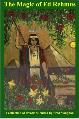
The Magic of Ed Rehmus, 192 pages - $15.00
by Ed Rehmus (edited by Fred Vaughan)
This collection of creations by Edward Rehmus includes essays, artwork, poetry, linguistic studies, comics, and puzzles. The style of Ed Rehmus' prose is reminiscent of H. L. Mencken in his hay day. As a friend said of Ed in eulogy, "He went for the bones of what he was considering and the stormy winds could make off with the sails if that was a consequence!" On his own behalf Ed had said, "What indolence and what prodigality to trust to usage that which ought always to be spontaneous, creative and conscious: speech!"
http://www.lulu.com/content/476575 - regular price.

Read More...

Tuesday, July 24, 2007

One of the Greatest Modern Composers: Stravinsky

Frank Luger headshot by Frank Luger

When I was in my pre-teens, my parents had arranged for me to take piano lessons. I was not particularly good at it, except for manual dexterity; but I had little ear for music, and even less patience for learning the delicate technicalities. It took about six months of ‘torture’ before my training was abandoned as hopeless. However, during that time, my private tutor, who was no lesser personage than Gabriella Bartók, the niece of the world-famous composer Béla Bartók, had often admonished me and tried to motivate me by insisting that I should aim at nothing less than excellence. She used to cite the examples of famous Hungarian musical geniuses, such as Liszt, Kodály, and Bartók; and, since this was already during the Stalinist times, for political ‘correctness’ she also cited such great names as Tchaikovsky, Rimsky-Korsakov, Rachmaninoff, and very often, Stravinsky.

She had never met the other three Russians, but she had trained for a while with Igor Fedorovich Stravinsky (1882-1971) in her youth; and so she was in position to tell me many stories, even amusing anecdotes. Now, it has been a generation (30 years) that Stravinsky died (Gabriella Bartók died even earlier, due to breast cancer, if I remember correctly); therefore, as a bit of commemoration, let me relate what I recall of her Stravinsky stories, interlaced, spiced, and completed with actual historical details.

While vacationing in Heidelberg, Germany, on a hot Summer afternoon in 1902, Rimsky-Korsakov was approached by a 20-year old law student from the University of St-Petersburg (later renamed Leningrad, now back to its old name). Introducing himself as the son of one of Russia’s foremost opera stars, the youth begged the composer to listen to a piece he had recently written and to tell him whether or not it showed any of the talent necessary for a career in music. Taken by surprise by the young man’s insistence but being delighted with his evident enthusiasm for music, Rimsky-Korsakov agreed to a hearing. The student played the piano for about half an hour, then respectfully awaited the ’verdict’ of the already famous composer.

“Young man, your music is quite nice,” Rimsky-Korsakov reportedly told him; “but in all fairness to you, I would suggest that you continue with your law studies. However, should your interest in music remain, you might perhaps enroll in some formal courses in counterpoint and harmony. Then, maybe, you will come back and play for me again and I will be able to give you a more favorable assessment.”

His hopes dashed for the moment, the crestfallen Stravinsky took the advice and returned to his law books. Music, however, soon gained the upper hand again. Writing a piano sonata, a year later he called on Rimsky-Korsakov a second time. The composer greeted him warmly and listened to his music intently, apparently impressed with what he was hearing. Occasionally he asked Stravinsky to repeat a specific passage, nodding and keeping time to the music when it was played. Then came the second verdict:

“You asked me once before if you had any ability whatsoever and I told you to continue with your law studies. I’ve just changed my mind. You are wasting your talents with law. Come to me tomorrow morning- early, mind you- and we will begin your training in serious instrumentation.”

In later years Stravinsky was to recall, the weeks and months he spent with Rimsky-Korsakov were among the happiest in his life. As a teacher, the composer was merciless. He drove his young apprentice and drove him very hard. Anything short of perfection brought down his wrath. Perfection, itself, he dismissed with scarcely a word of praise. “A man’s music,” Rimsky-Korsakov used to explain, “should always be perfect, so why should we applaud something that is so basic to successful composing.”

Prompted by such admonishings, late in 1907 Stravinsky completed his first large work, the “Symphony in E-flat major.” Performed in St-Petersburg on January 22, 1908, it instantly met with critical acclaim. A second work finished soon afterward and named “Le Faune et la bergère” (Fauna and the shepherdess) did not fare as well, but it did prove to be more than sufficient to bolster Stravinsky’s rising stature in the world of music.

Galvanized into action, confident as he had never been before, tireless in his work, Stravinsky threw himself into his music. Secretly, he began to compose a new orchestral work, which he hoped to present as a gift to Rimsky-Korsakov upon the forthcoming marriage of the master’s daughter. Called “Fireworks”, it was finished just a week before the wedding. Delighted with his surprise, Stravinsky packed up his score and shipped it off to his revered master. However, by some irony of fate, Rimsky-Korsakov was never to see it. On the day that it arrived, he died. One of the world’s greatest composers had passed on and for Igor Stravinsky, the loss was a terrible blow. Friend, teacher, and colleague, Rimsky-Korsakov had been the young composer’s guide and inspiration.

Presented in St-Petersburg, “Fireworks” exerted a profound influence on the future of the rising composer. In the audience, the night of its debut, was Serge Diaghilev, soon to become famous as the mastermind behind the magnificent ‘Ballet Russe’ [Russian Ballet, later almost synonymous with ‘Bolshoi’ even though ‘Bolshoi’ was the name of the largest (as it means “big” or “great” in Russian) and most elegant theater in Moscow during and after Stalin]. Hearing Stravinsky’s music, Diaghilev invited the composer to orchestrate two Chopin pieces for a forthcoming ballet performance. Stravinsky did, and the results were so outstanding that he was commissioned to undertake a major work revolving around an old Russian myth- the tale of the Fire-Bird.

It took Stravinsky nearly a year to complete his task, but at last, on June 25, 1910, “L’Oiseau de Feu” or “The Fire-Bird”, was presented at the Paris Opera. The audience went wild with delight. Stravinsky was given an incredible ovation. Debussy, hearing the score, rose at the conclusion of the ballet and hurled himself into Stravinsky’s arms. Gabriel Pierne, who conducted that evening, later declared, “The Fire-Bird” is music such as I have never heard before. The world will not soon forget it. Mark my words. Igor Stravinsky will someday help free the musical thought of today and lead it in new directions.” And so it proved. “The Fire-Bird” established Stravinsky’s reputation and carried his name to music lovers around the globe. Elated with his triumph, the composer immediately plunged into a new work. Titled “Petrouchka”, it was first seen in Paris in 1911. To ensure its success, Diaghilev had seen to it that Nijinsky and Karsavina were the ballet’s principal dancers, that the finest supporting cast to be found anywhere was on hand, and that the settings were of unmatched beauty.

Paris received “Petrouchka” with even more enthusiasm than that attending the debut of “The Fire-Bird”. The city’s newspapers, next morning, hailed Stravinsky as a personage of music equal in stature to France’s beloved Claude Debussy. And Debussy himself declared, “That man injects a vital force into music that will carry him- and music- very far”.

Following “Petrouchka” came “The Rite of Spring”, a ballet which perhaps evoked one of the most fantastic exhibitions in the history of music. Presented on May 29, 1913, rarely has a composition ever carried its audience away so completely. Even for Igor Stravinsky, “The Rite of Spring” marked a monumental turning point in his career. His success established, the piece shook the musical world to its very roots and made him one of the most loved or most despised, most defended or most maligned figures in the history of his art. In rapid succession, he proceeded to compose such works as the opera-oratorio “Oedipus Rex”; the ballet “Apollon Musagete”; the suite “Pulcinella”; and the ballet “L’Histoire de Soldat” (Soldier’s History).

Visiting the United States for the first time in 1925, Stravinsky was much impressed with what he saw. Musical America, on the other hand, was just as impressed with what it saw in him and welcomed the composer with open arms. The various tours on which he embarked in the years that followed were all highly successful, so much so, as a matter of fact, that when Stravinsky completed his ballet “Jeu de Cartes” (Card Game) , he decided it would be given its premiere in New York. Presented in 1937; the audience proved to be every bit as enthusiastic as the Parisian groups that had greeted the ballets “The Fire-Bird” and “Petrouchka”. With the onset of World War II, Stravinsky abandoned his home in the outskirts of Paris. Traveling to the United States and eventually settling in California, be became a naturalized American citizen and plunged back into his work. His major American works have included the magnificent opera “Rake’s Progress”; the ballet “Orpheus”; and the controversial “symphony in Three Movements”.

This is where I should stop the storytelling, because my own musical training had stopped in the mid-1950’s. Stravinsky had lived and produced until his death in 1971, but I know nothing of his late period in life. At any rate, it is generally recognized that already in the mid-1950’s he was acknowledged as one of the world’s greatest modern composers. Igor Fedorovich Stravinsky had achieved his aims while he was still alive, regardless of difficulties; and thus had been successful in avoiding merely posthumous recognition, the lamentable fate of many great artists.

Read More...

Why Take the Fifth?

" No person shall be held to answer for a capital, or otherwise infamous crime, unless on a presentment or indictment of a Grand Jury, except in cases arising in the land or naval forces, or in the Militia, when in actual service in time of War or public danger; nor shall any person be subject for the same offense to be twice put in jeopardy of life or limb; nor shall be compelled in any criminal case to be a witness against himself, nor be deprived of life, liberty, or property, without due process of law; nor shall private property be taken for public use, without just compensation."

... "'defence' of Lie's behaviour by referring to the close relationship between genius and madness really created a generally accepted explanation which has survived up to the present. By this act of 'defence' Klein did his old friend an incredible injustice."1

Fred Vaughan headshot by Fred Vaughan

We all know what it means to "take the fifth". It ain't good!

There have been many attempts to reduce the number, modify the structure, and alter the phraseology of Euclid's postulates, but it has been found that for plane projective geometry they are by and large very sound as initially presented. However, there seems to have been little effort to determine whether there might be a different postulate more appropriate that the fifth for modification to provide compatibility with the formalism of relativity and our current view of the universe.

That one of Euclid's postulates upon which he based The Elements of his geometry might be flawed, or worse yet, unnecessary is, of course, an integral part of present day establishmentarian mathematics and physics. The Fifth Postulate, that through any point only one line can be drawn parallel to any other has been unanimously selected as the culpable postulate invalidated by the current understanding of relativity and cosmology at larger scales of our universe.

Long before that mathematicians began exploring alternative geometrical possibilities deriving from the elimination of this assumption after repeatedly failing to reduce it to a provable theorem. This was before there was any inkling that we might actually live in such an alternative universe.2 Gauss actually attempted measurements employing light signals to determine based on such empirical evidence whether that might be the case, however. But with the advent of Einstein's relativity, bold conjectures of a combined spacetime exhibiting strange geometrical properties have been totally accepted by the scientific community, so that alternative-fifth-postulate-geometries thrive; notwithstanding this feeding frenzy on the Fifth, Postulate convincing evidence that another of Euclid's postulates is invalid continues to be denied.

Relativity provides the analytic work of pioneering mathematicians a context of immediate relevance and it should not be surprising that their work would have been re-evaluated with renewed interest. These former discoveries concerning viable geometries not requiring Euclid's Fifth Postulate revitalized mathematical physics.

One must note that even in the general theory of relativity, physical experiments are always considered as being conducted within locally-Lorentz reference frames. What this means is that even though an observer may experience wild gyrations of acceleration due to gravitation or his own rocket engines, at each moment in time it is only his instantaneous velocity relative to what is being observed that is pertinent to the geometry of his current observations. This is where one must begin if the objective is to map observations between oneself and other observers in relative motion. So the Lorentz geometry of special relativity would seem to be the local geometry of choice. This has been thought to involve a flat spacetime, but it is hardly without distortion as the author has discussed elsewhere. In particular relativistic aberration distorts the directions of objects in one frame of reference relative to where those objects are to be seen in the other. The coordinate axes of the other observer are not immune to this distortion

Let us look at Euclid's five postulates and attempt to determine for ourselves which one seems most likely to be at odds with such observational inferences made from Lorentz reference frames. Here are all five postulates3:

  1. Only one straight line can be drawn between any two points.
  2. A finite straight line can be extended indefinitely.
  3. Only one circle of a given radius can be centered at a given point.
  4. Through a point at a distance from a given line there is only one line that can be drawn through the point that is perpendicular to the given line.
  5. Through a point at a distance from a given line there is only one line that can be drawn that is parallel to the given line. 4

In lieu of the apparent directional distortions of the three perpendiculars that constitute the spatial axes of Lorentz reference frames of various observers in relative motion, one can but wonder why there has been this preoccupation with the Fifth Postulate anyway? What we have found is that each of all possible coincident observers with unique relative velocities would witness all other observers' perpendicular directions to be misaligned with regard to their own. Parallel lines of sight in one frame of reference would remain parallel for the others although they would in concert be pointing off in other directions.

So it seems self-evident that to make sense of the coordination of the geometrical observations and constructions between relatively moving observers, we must reject the Fourth Postulate! It seems to the author that we may even need a new theory of perpendiculars. But his elder sister did nickname him "Perpendicular" — Perpy for short — so maybe such stigmata warps ones sense of geometrical rectitude.

On that charge I think I will claim my Fifth Amendment right.


1 Written by Marius Lie's friend and collaborator Friedrich Engel at his death. The quote is provided gratuitously as being of possible interest to this audience.

2 Robert Bonola, Non-Euclidean Geometry, Dover, New York (1955), originally published 1914. Supplements within this book contain "The Theory of Parallels" by Nicholas Lobachevski, and "The Science of Absolute Space" by John Bolyai. The book also provides a context for the pioneering efforts of such names as Gerolamo Saccheri (1667-1733), Johann Lambert (1728-1777), Adrien Legendre (1752-1833), Wolfgang Bolyai (1775-1856), Friedrich Wachter (1792-1817), Bernhard Thibaut (1776-1832), Karl Gauss (1777-1855, Ferdinand Schweikart (1780-1859), Franz Taurinus (1794-1874), Nicholas Lobachevski (1793-1856), John Bolyai (1802-1860), B. Riemann (1826-1866), Ludwig Helmholtz (1821-1894), and Marius Lie (1842-1899).

3 This version involves only a slight rephrasing of those given by Sir Thomas Heath in The Elements of Euclid. Changes parallel Playfair's rephrasing of the Fifth Postulate.

4 In 1795, John Playfair (1748-1819) offered an alternative version of the originally translated postulate involving interior angles, which was: That if a straight line falling on two straight lines makes the interior angles on the same side less than two right angles, the straight lines, if produced indefinitely, will meet on that side on which the angles are less that two right angles. This alternative version, of course, gives rise to the identical geometry of Euclid. It is Playfair's version of the Fifth Postulate that most often appears in discussions

Read More...

Monday, July 23, 2007

Practice Your Profession

Carle P. Graffunder headshot by Carle P. Graffunder

This is a story I dreamed last night — as much as I can remember.

In my dream I wanted to become a medical doctor. The dream probably came about because I had been considering the years' long unremitting and debilitating pain of a close friend. During the course of the day I had had conversations about pain with two nurses and, independently, with my friend's primary care physician and medical insurance company. So perhaps it was the attendance on these that allowed the dream to become expressed.

The dream centered on a written examination that, if passed, would grant me my medical degree and a license to practice. When, in the dream, the examination paper, a rather copious document, was returned to me, there was a mark on the left quadrant of the page in the margin. It read "42." I took note of the scribbled number with some apprehension. I did not at once grasp the significance of those figures. Then I noticed that they referred to Part One of the exam. That part of the exam took up about two-thirds of the first page. The remainder of the sheet referred to the rest of the exam; in that margin was written "43."

Drawing on my previous experience with grading, I had assumed at first that my grade was "42" for the entire exam, a mark that meant "failure." My spirits, however, perked up when I saw a second score; for I began to add the two scores together. My elation was immediately dashed. A total score of "85," although adequate to pass, was hardly acceptable to me since it indicated a score that was not in the range of "best." That, in turn, meant I could count myself as hardly a notch above "mediocre" as a student. Furthermore, from such knowledge, I could predict that I would be not much more than an "average" doctor, perhaps even "good" but by no stretch of the imagination one of the "best." Chagrined, downcast, and embarrassed, I was inwardly ashamed.

Out of my vision, I gradually became aware in my dream that my major professor who was also my mentor was approaching me. I turned slightly to find him at my elbow. "This is so humiliating," I told him. He looked slowly into my eyes and said, "Someone will always surpass you in one thing or another. Your grade is better than 95 per cent of those who took the test and better than 99 per cent of all practicing MD's. Your job from now on will be to learn the difference between honest ignorance and flim-flam. Take your degree and your license and practice your profession!"

I think the dream was an expression of deep intuition. In my waking life I had given my best for a very long time to find a way to lessen my friend's excruciating pain. I strongly felt the discouragement of failure to do that. But my profound self was letting me know that attempts to penetrate ignorance, even though unsuccessful, are more to be honored than pretense.

Read More...