Tuesday, September 25, 2007

College Mathematics: The Unteachable, Or Untaught?

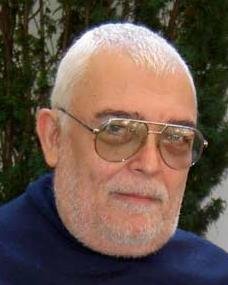
Ron Penner headshot by Ron Penner

I obtained a degree in Mathematics, so became somewhat familiar with the way it was taught and of the difficulties it seemed to engender in many others. These experiences prompted a series of problems which I later attempted to unravel, along with other related issues, which I now propose to explore.

I was often appalled and somewhat amazed at the manner in which these courses were taught, especially at the 100 and 200 level. There was so much verbage written on a blackboard or overhead projector which appeared to me to be pointless, albeit somewhat conventional. But later I began to muse, 'how can these subjects effectively be taught' and I began to appreciate the difficulties the professors experienced. I hypothesized that they had learnt and experienced Mathematics in a way far different from most of their students and that the gap was far too wide to be bridged by any conventional pedagogical methodology

What was this exprience of learning that they and many Math majors had and others did not seem to possess? The most basic was to regard this level of Mathematics, in most of its enormous diversity, as a language, a symbolic language that needed to be learnt and used. But it was much more sensitive to how much one took in at a glance, or alternatively how quickly one read that language, than learning to read one's native language, for this is much more akin to pattern recognition of an ungerlying logic, than to reading as it is usually understood. There seemed to me to be a minimum speed of assimilation that was requisite to fully grasp these concepts and courses, and that that was an aptitude that could hardly be taught. Another was an appreciation for the elegance of the reasoning entailed, and even the elegance of the notation. And finally, there was the ability and need, to generalize, to not be content with a theorem or lemma or definition until you had expanded these, until you had discovered as many of their extensions and further implications as possible. All of this was a mind-set that one either possessed or did not possess, although these are always matters of degree, but how does one teach a mind-set that is innate in some and absent in others? This is a very difficult question, and I am not sure that there really is an adequate answer to it.

I also found that I was very sensitive to the way such subjects were set forth on the page, and rummaged through the library until I found the most elegant text---seldom the one that was prescribed for the course. For if Bertrand Russell stated 'that there is no such thing as ugly Mathematics,' that did not preclude many ugly or less than elegant textbooks. And in the Physical Sciences, in particular, the ratio between written text or explanation and mathematical formulae was important to me, so that if one could follow the text simply by following the logical development of the mathematics, that always seemed something that was desirable. These I take to possibly be limited strategems to bridge the chasm I previously adumbrated. Of course, this dictum applies to any study, but particularly to Mathematics and to a slightly lesser extent the Physical Sciences, 'Never be content, initially, with the text that is assigned.' Then there is the appreciation of rigour of analysis. In an introductory course on Differential Equations, there was a text I always will value and esteem because it was so beautifully written and rigorous, which equated to greater simplicity and ease of comprehension. But one day I heard an acquaintance refer to this text as "the yellow peril"---it had a yellow cover---and that all of the students in his class detested it, and I was amazed and at a loss for words. Rigour of analysis, I mournfully concluded must not be an easily acquired taste. There is also the width of generalization of a particular approach which gives joy to that phenomena when it occurs. In trigonometry, the double and multiple angle formulae seem to bear no intimate relationship to one another. Then one discovers complex numbers and their utility, i.e. e to the i-theta power and the whole subject opens up and much greater vistas appear. I will always remember discovering, quite on my own, the Gamma and Beta Integrals. and the joy in discovering how many integrals could be fitted into these two basic structures simply through simple changes of variables.

But there are deep differences of aptitude and approach even among math majors themselves, perhaps greater than in any other discipline. There are those who excel in reading and comprehending and using the symbolisms, of which Algebra would be the prototype, and those who are far more spacially oriented, of which the Geometries serves as the prototype. I once heard of an experiment in teaching beginning college Mathematics at a private school for the gifted in Seattle. The material had been presented from an essentially algebraic prespective, when suddenly, in the middle of the course, it was taught from an essentially geometric perspective. And suddenly the class standing tipped over, becoming almost the exact opposite of what it had been. The geometric approach can greatly simplify many areas, but there are vast stretches of Mathematics for which there is no effective substitute for symbolic tranformations and manipulations. There is one further division which is the least recognized, but has increasingly become vital in more recent years. This involves a gift for, and love of, abstraction, for its own sake. This can also involve a love of getting at the fundaments of a subject. For lack of a better term, this might be called the Axiomatic Approach. Abstract Algebra can serve as its prototype and an n-dimensional cohomology group could serve as an example. Those gifted with this approach or aptitude will tend to have a better grasp of the whole of Mathematics, at least in outline form, and be the ones most likely to achieve some of the syntheses modern Mathematics desperately needs.

But I cannot leave this article so bleak and not attempt some remedies to the difficulties posed, some way of bridging these gaps for those not disposed to Mathematics in general. There are certain moments in the life of learning where one enters, in something approaching a Piagetian sense, a totally new domain. I believe one should, in many cases, pause and survey what lies ahead, emphasizing the great power and utility of the new approach, as well as some of the anticipated difficulties and how they may be overcome, rather than proceeding linearly to cover a prescribed curricula. One such branching point would surely be the point at which variables are first introduced to stand for any number within a specified domain. Also it might help if this introduction was combined with a sense that one was entering upon a new phase of mental maturity and growth. Then there are spectacular spurts in intellectual growth which can change and redirect one's whole life, and these need to be recognized and provided for. In his book, "Disturbing The Universe," Freeman Dyson briefly described an incident that occurred when he was ten years old. He purchased a book on the Differential and Integral Calculus about 700 pages in length, and when the family went for a winter retreat at Christmas break on the east coast of England just prior to World War II, he studied the work and did all of the problems for about ten hours a day, ten days to two weeks. I have always assumed since I read this, that if this or a similar experience had not occurred at about this stage, we would never have heard of Freeman Dyson. I had a similar experience, much later in life with the Calculus in an October retreat in Moclips---also on the ocean---after a summer as a forest lookout. The only way these experiences can be accomodated in colleges and universities, for those who need and are prone to them, in my opinion, is through a liberal, tutorial approach where one can design when and how to study a specific topic or field within a discipline. Someday psychometric tests may be devised to identify these individuals before they begin to enter college. But there are many instances in which courses tailored to specific disciplines such as Physics, Chemistry, the Life Siences and the Social Sciences are specially designed for the needs of these majors. This essentially involves applied Mathematics, in which a major aspect is to understand why certain formulae give a correct description of the phenomena they model, as well as how they can most effectively be used. This is far more than simply providing a list of relevant formulae and gives 'value added' rather than a 'cookbook approach.' And especially in the Social Sciences, Statistics must be taught to clearly delineate both the strenghs and limitations or various approaches. There is perhaps a great need for mathematicians to act as a kind of academic policeman and interfere in any department of the University when they feel that their subject is being misused or trivialized. But they must also, in such courses, teach others to---and demand that they--- think for themselves. They are not meant---and do not see themselves---as a service agency for the solution of problems in Mathematics, others in the university and society as a whole, find difficult to solve on their own. Finally, the Computer Sciences have taken over part of the former function of Mathematics in providing algorithms which encompass in their generality, almost all disciplines, and, in some sense, have replaced Mathematics, as the premier discipline for all of the other sciences---and this is wellcome.

My Senecan ramble must come to a close, hoping that it has not been too disjointed or too obvious.

Read More...

Monday, September 24, 2007

Food and the Concept of Authenticity

Brian Schwartz headshot by Brian Schwartz

I wrote this as part of a Chowhound discussion of authentic food. Previous contributors had shredded the concept of authenticity into meaninglessness... e.g. is Burger King authentic American cuisine since many Americans like to eat there, etc. So I wrote this:

All concepts fray around the edges, and, as Derrida and his followers proved, if you pick at these edges the whole concept will unravel. Wittgenstein said that some words embrace whole families of things united only by vague resemblances and ties of consanguinity. And so it is with authenticity. Let's try to pick an example close to the core.

In an article in the New Yorker called "Carnal Knowledge: How I became a Tuscan Butcher" (later a part of his book), Bill Buford describes a months-long sojourn with a butcher in Tuscany who taught him his craft. Handed down over the centuries, the seemingly simple procedures for cutting up a pig were devilishly hard to learn and many a time Buford did a pratfall into a vat of pig slime to the great amusement of all (except him). But slowly he learned them, the same way you learn to swim or drive a car. I think the sausages the butcher made were authentic. They are made 1) by complex procedures 2) which evolved over a long period of time 3) and are best learned by apprenticeship 4) and the learning increases the appreciation of the food 5) in part because of an attitude of reverence which is imparted along with the tradition.

At least for me, a lot of these factors come into play when I ask if food is authentic. Maybe authenticity is the wrong word. No one asks if Michelangelo's painting is authentic (unless they suspect it is a forgery). Even for great communal and traditional art forms like the temple architecture and dances of Bali, authenticity takes second place to greatness. Since food is art, maybe a new linguistic category is needed. One day, perhaps, Tuscan butchers will be an extinct breed, and everyone in Tuscany will want to buy supermarket patties made in the US, and top it with sauce from a can. In time that will become the authentic Tuscan meal. But it will not be great, nor will it be art, nor will it be tied to a long tradition, or any tradition at all, and reverence will not be a part of it.

Czech food Czech, please!
Creative Commons Licensed Photo by flickr user 'puzzlement'. Some rights reserved.

Read More...

Wednesday, September 19, 2007

Working Hours, Machines and Unemployment

Albert Frank Headshot by Albert Frank

Machines such as computers and robots have been conceived to help man, not to give him problems. But, what happens? Currently they are causing unemployment! It is certainly not their fault, but this sad situation requires that we consider an alteration of the present system.

To do a specific task ten hours would have been required thirty years ago (as an example). Now, with the help of machines, five hours are enough. Therefore, for the same productivity, instead of 38 hours per week -- the predominant European standard work week -- only 19 hours are needed. (There will be a few more in total to take into account the maintenance of the machines.) This is magnificent: thanks to machines, it should be possible for people to work only half as long to get the same result. It should be a big success! (We won't digress here on a discussion of the problems of a civilisation of leisure.)

What happens in practice, however? Now we encounter imposed work hours -- the number of hours per week just to "be there" in the office, for instance, or a laboratory -- rather than what must be accomplished. And, thanks to machines, now one man or woman can, during the course of this time interval, produce what would have required two people -- one of the two of whom has lost his job in the name of efficiency! So, machines are now perceived as man's enemies! This perspective may seem simplistic, but there are so many examples: to produce an invoice, sell an airline ticket, print an article, etc..

And it doesn't seem to stop: Competition (with a capital C), the "taboo" of violating work hours to maintain the respect of peers, the fear (!) of being replaced by a machine that is "faster and more efficient". And what about the value of the shares of company stock -- if "we are not 'Number One', then what?" How many people are required for maximum "efficiency" (I don't like this term), if they were allowed to work at their own pace in executing the given tasks?

I will finish by giving an example from my own fond memories: In 1975, I was responsible for the schedules of the National University of Zaire, Campus of Kisangani. The yearly schedule required consideration of a mass of data. (This included lists of those on sabbatical, visiting professors, reorganizations, classroom facilities with class sizes ranging from 20 to 800 students per room, etc.. In one week, I had performed the scheduling of everyone at the university for an entire year. There were a few hundred Professors and students represented and all were satisfied.

When the Chief of Staff of the university and I convened, he said, "Albert, you performed an effort that would 'normally' have taken two months; therefore, I am giving you seven weeks of holiday." Life would be beautiful if it was always -- or at least sometimes -- like that, wouldn't it?

an early blogger
An early blogger.

Read More...

Sunday, September 16, 2007

Fundamental Requirements in Building Physical Theories

An Original Research Essay

Frank Luger headshot by Frank Luger

As mentioned in some of my previous essays the philosophy of science requires that any physical theory worth its salt must be built around at least potential observability and must obey the reduction principle, i.e. be capable of being shown to rest on established theories. These are logical requirements based on the consistency of Nature. However, if one approaches theory building in physics from the physical rather than the philosophical side, there are some other principles to obey; and these principles are sine qua nonrequirements of proper physical theories, in the sense of transcending any particular theory. Collectively, they may be called symmetry and conservation laws; and they directly rest upon invariances, which are independent of time and space and which are also based on the consistency of Nature. The difference is that while the philo-sophical requirements are a priori, that is, "dic-tated" by induction and synthesis; the physical requirements are a posteriori, that is, dictated by deduction and analysis of actual data. For the present heuristic purposes, let us concentrate on the latter kinds1.

Symmetry in Nature has been dealt with by some very famous authors2and likewise, conservation lawshave also been extensively discussed3. Instrumentalism and its extreme form, solipsism, would proclaim that as "beauty is in the eye of the beholder," symmetry is a figment of human imagination, based on the basic human need for aesthetic experiences. Scientific realism in general, and quantum realism in particular, on the other hand, would maintain that symmetry is inherentin Nature; and this whole disagreement in philosophical perspectives between instrumentalism and realism represents, in fact, the difference between epistemicand onticviewpoints and orientation emphases. While there are certain difficulties with both vantage points, especially in their extreme forms, most of the data from recent research in physics seems to tilt the balance in favor of quantum realism and against instrumentalism, especially in its earlier ("Copenhagen School") form4. Let's now briefly review first the theory of the basic symmetry and conservation laws, as they represent broad generalizations whereby physical theories may transcend time and space; and then, list the most important principles and laws.

Based on concepts from classical geometry, the word symmetryimplies divisibility into two or more even parts of any regular shape in 1, 2, or 3 dimensional ordinary (Euclidean) space. However, in physics, 'symmetry' has a more precise, albeit more general meaning than in geometry. Reversible balance is implied, that is, something has a particular type of symmetry if a specific operation is performed on it, yet it remains essentially unchanged. For example, if two sides of a symmetrical figure can be interchanged, the figure itself remains basically invariant. A triangle may be moved any distance, if there is neither rotation nor expansion-contraction involved, then the triangle remains symmetrical under the operation of translation in space. This means little in (projective) geometry, but in actual physical situations, it can be far from trivial. If we imagine an initially symmetrical shape with some weight attached to it as being moved to a different gravitational field, symmetry will not be conserved. Yet, the basic laws of physics are supposed to be independent from locations in space. And they are. What may be different are those aspects which are variable, but their interrelationships do not change. Symmetry will be conserved not relative to a fixed observer, but relative to the form in which the basic laws are expressed -- i.e. their mathematical descriptions.

The inevitable conclusion is that it is the mathematical expressions of physical laws which are responsible for ensuring that the form of the basic laws of physics is symmetrical under the operation of translation in space. For example, the law of conservation of momentum is a mathematical consequence of the fact that the basic laws have this property of assuming the same form at all points in space. The conservation law is a consequence of the symmetry principle, and there is reason to believe that the symmetry principle is more fundamental than the detailed form of the conservation law. A general theory, thanks to its mathematical armoury in which tensor analysis and differentiable manifolds assume great importance, is able to formulate basic equations which have the property of assuming the same form at all points in space.

Therefore, when "indulging" in theory building, the theoretical physicist is well advised to try to formulate his basic laws so that they become and remain symmetrical under any and all fundamental transformation. Fortunately, there are several well-known and well-established guidelines; and these are what we may subsume under the general heading of symmetry principles and conservation laws. It is important to keep in mind that conservation laws are mathematical consequences of various symmetries, thus as long as the theorist ensures that his formulations do not violate basic principles of symmetry, he stands a good chance of being subsequently able to deduce the appropriate conservation laws, and prove, at least to the satisfaction of the requirements of mathematical logic, the soundness of his conceptualizations. By contrast, failure to observe this guideline may result in heaps of impressive-looking pseudoscientific rubbish, as for example in various airy grandiose schemes and trendy New Age fads and hasty oversimplifications ad nauseam5. While it is true that a few symmetry principles and conservation laws are still controversial, and it is not always clear which conservation law is necessarily a (mathematical) consequence of which symmetry principle; the fact is that most of the relationships are well established, and repeated mathematical testing of various new theoretical models is not only always helpful but perhaps even mandatoryas well. That is, before making predictions and deducing testable hypotheses and subjecting them to observations and experiments, it is best to have played the devil's advocate and trying as hard as one can, to make a "liar" of oneself. This grueling task will pay grateful dividends later, by saving the theorist from self-discreditation and its inevitable consequence, death by ridicule.

Following Einstein and his postulates of Special Relativity, we accept that the form of the basic laws of physics is the same at all points in space. This is called symmetry under translation in space, and (mathematically) it leads to the law of conservation of linear momentum. This is one of the most fundamental principles of modern physics. Next, in a similar vein, we also accept that the basic laws of physics describing a system apply in the same form under fixed angle rotations — i.e. the laws have the same form in all direction. We may call this the principle of symmetry under rotation in space, and again, (mathematically) it gives rise to the law of conservation of angular momentum. Now comes time, i.e. that the form of the basic laws of physics does not change with the passage of time. Once a fundamental invariance is successfully identified, it can be assumed with great confidence that what was the case many millions of years ago will still be the case indefinitely into the future. This principle is called symmetry under translation in time, and (mathematically) it yields the law of conservation of energy (also known as the First Law of Thermodynamics). However, the next principle, that of symmetry under reversal of timeis somewhat controversial, because although it is theoretically possible, it is practically never observed. The principle leads to the great Second Law of Thermodynamics, through a series of steps which would be a bit too technical for the present purposes. Symmetry under time reversal maintains that a time reversal process can occur, but it does not say that it does occur or that it ever will occur. This is a rather subtle, and thus a much misunderstood and disputed point, as discussed in my paper "Conceptual Skepticism in Irreversible Energetics", cited in footnote No.1 (14) above. It is precisely because symmetry under time reversal is never observed in practice, but the opposite, i.e. asymmetry and irreversibility are always observed, that the Second Law of Thermodynamics is still one of the most controversial of the basic laws of physics. Disregarding mathematics for the moment, how theoretical reversibility gives rise to practical irreversibility in Nature remains somewhat nebulous. It is possible that irreversibility is a special case of reversibility due to a hitherto unexplained intervening construct or variable, rather than the other way around. Future research will tell, we hope.

Still another consequence of Einstein's Special Relativity theory is that the basic laws of physics have the same form for all observers, regardless of the observers' motions. In other words, the basic laws have the same form in all inertial frames of reference, and thus do not depend on the velocity or momentum of the observer. In Einstein's General Theory of Relativity, which is not as well substantiated as the Special Theory, the basic laws are assumed to have the same form for all observers, no matter how complicated their motions might be. Altogether, this is the principle of relativistic symmetry.

Turning to microphysics, it must be considered that fundamental particles have no individual differences in the sense of "identities", i.e. if we interchange two particles of the same class or category (vide infra), such action does not influence the physical process as a whole. This indistinguishability of similar particles gives rise to the principle of symmetry under interchange of similar particles. An electron is no different from any other electron. Furthermore, if negative charge cancels an equal amount of positive charge, then there is no known physical process which can change the net amount of electric charge. This is known as the law of conservation of electric charge, and it is thought to be a (mathematical) consequence of certain symmetry properties of the quantum mechanical wave function psy (Ψ). Similarly, if a particle cancels its antiparticle, there is no known physical process which changes the net number of leptons (light particles); and this is known as the law of conservation of leptons, although an underlying symmetry principle has not been unequivocally established. In a like vein, also in particle-antiparticle cancellations, the net number of baryons (heavy particles) remains the same; this is the law of conservation of baryons, and similarly to leptons, no underlying symmetry principle has been properly established. It is noteworthy, that while there are conservation laws for fermions, there are no such laws for bosons, photons, pions, kaons, etas, and gravitons.

There are also imperfect symmetries, which may or may not be intrinsic to Nature. That is, it is possible that Nature is constructed according to a scheme of partial or imperfect symmetry, whereby irreversibility would be the rule and reversibility the exception. It is more probable, however, that things are the other way around (reversibility is the rule and irreversibility is the exception), and the fault lies within our own machinery, as mentioned in some of my other writings (see footnotes). One such imperfect symmetry is charge independence. There is a principle of symmetry of isotopic spin, whose (mathematical) correspondent is a law of conservation of isotopic spin. This law applies to strong nuclear interactions, but is broken by electromagnetic and weak interactions. Also, there are then processes which involve what have come to be called the strange particles; and to each of them an integral number had been assigned, known as its strangeness. The law of conservation of strangeness is also an imperfect symmetry, inasmuch as strangeness is conserved in strong interactions, but not in weak interactions. However, the very particle-antiparticle symmetry turns out to be a broken or imperfect symmetry, because all weak interactions violate it; and there is no fully satisfactory explanation for this imperfect charge conjugation.

The principle of mirror symmetry maintains that for every known physical process there is another possible process which is identical with the mirror image of the first. Yet, this can also be a broken or imperfect symmetry, depending on "handedness" — inasmuch as one cannot put a left-hand glove on the right hand, no matter how much one glove may seem like the mirror image of the other. Mirror symmetry can be expressed mathematically in terms of a quantity called parity and there is a corresponding law of conservation of parity. However, weak interactions do not conserve parity, although all other types of interactions do. One example is that although the neutrino and the antineutrino are mirror images of one another, the neutrino is like a left-hand glove and the antineutrino is like a right-hand glove. Generally speaking, all weak interactions violate the symmetry principle of mirror reflection. All weak interactions violate the symmetry principle of particle-antiparticle interchange. All interactions, including weak interactions, are symmetrical under the combined operation of mirror reflection plus particle-antiparticle interchange6.

Despite such "violations" and "broken symmetries", when the universal "big" picture is contemplated, symmetries outweigh asymmetries sufficiently to restore one's faith in the esthetic beauty and efficient elegance of Nature. As shown by recent advances in cosmology7, although asymmetries are cosmological in origin, they somehow seem to fit integrally into the overall scheme of things, and thus represent no violations of any great law, but rather, they help to give rise to them and to maintain them in a sort of dynamic equilibrium, however unbalanced certain parts of the whole seem to be from time to time or even all the time. Therefore, it seems reasonable to conclude, that the more we come to understand the fundamental nature and ways of the Universe, the more we may become enchanted by its intrinsic beauty and harmony on the grandest as well as the minutest scales, whereby we may even catch an occasional glimpse of Eternity.


1 The philosophical requirements of potential observatibility and the reduction principle will be dealt with in another essay, which will examine the connection between the philosophy of quantum mechanics and that of modern interactional psychology, more or less within the framework of General Systems Theory.

2 e.g. Weyl, H. Symmetry, Princeton University Press, 1952; Wigner, E.P.: The unreasonable effectiveness of mathematics in the natural sciences, in Symmetries and Reflections, Scientific Essays of E.P. Wigner, Bloomington: Indiana University Press, 1978; Ziman, J.: Reliable Knowledge, An Explanation of the Grounds for Belief in Science, Cambridge: Cambridge University Press, 1978; etc.

3 e.g. Feynman, R.: The Character of Physical Laws, Cambridge, Mass.: The M.I.T. Press, 1965; Jammer, M.: The Philosophy of Quantum Mechanics, New York: Wiley, 1974; Weisskopf, V.F.: Knowledge and Wonder, Cambridge, Mass.: The M.I.T. Press, 1979; Ziman, J.: op. cit.; etc.

4 e.g.: Cook, Sir A.: The Observational Foundations of Physics, Cambridge: Cambridge University Press, 1994; d'Espagnat, B.: Reality and the Physicist, Cambridge: Cambridge University Press, 1989; Hawking, S.W.: A Brief History of Time, New York: Bantam, 1988; Peierls, R.: More Surprises in Theoretical Physics, Princeton, N.J.: Princeton University Press, 1991; Rohrlich, F.: From Paradox to Reality: Our Basic Concepts of the Physical World, Cambridge: Cambridge University Press, 1989; Weinberg, S.: The Quantum Theory of Fields, Vols. I-III, Cambridge: Cambridge University Press, 1995, 1996, 2000; etc.

5 e.g. Capra, F.: The Tao of Physics, New York: Bantam, 1975; LaViolette, P.A.: Beyond the Big Bang: Ancient Myth and the Science of Continuous Creation, Rochester, Vt.: Park Street Press, 1995; Zukav, G.: The Dancing Wu-Li Masters: An Overview of the New Physics, New York: Bantam, 1980; etc.

6 e.g. Blohintsev, D.I. Questions of Principle in Quantum Mechanics and Measure Theory in Quantum Mechanics, Moscow: Science, 1981; Eisberg, R. & Resnick, R.: Quantum Physics of Atoms, Molecules, Solids, Nuclei, and Particles, , 2nd ed., New York: Wiley, 1985; Holland, P.R.: The Quantum Theory of Motion, Cambridge: Cambridge University Press, 1993; Gómez, C., Ruiz-Altaba, M., & Sierra, G.: Quantum Groups in Two-Dimensional Physics, Cambridge: Cambridge University Press, 1996; McQuarrie, D.A.: Quantum Chemistry, Mill Valley, Calif.: University Science Books, 1983; etc.

7 e.g. Barrow, J.D.: The Origin of the Universe, New York: Basic Books, 1994; Binney, J. & Tremaine, S.: Galactic Dynamics, Princeton, N.J.: Princeton Astrophysics Series, 1987; Hawking, S.W.: op. cit., 1988; Hawking, S.W.: Black Holes and Baby Universes, New York; Bantam, 1993; Hawking, S.W. & Penrose, R.: The Nature of Space and Time, Princeton, N.J.: Princeton University Press, 1996; Kaufmann III, W. J.: Relativity and Cosmology, 2nd ed., New York: Harper & Row, 1985; Penrose, R. & Rindler, W.: Spinors and Space-Time, Vol.II: Spinor and Twistor Methods in Space-Time Geometry, Cambridge: Cambridge University Press, 1993; Rindler, W.: Essential Relativity: Special, General, and Cosmological, New York: McGraw-Hill, 1977; Wald, R.: Space, Time, and Gravity, Chicago Press, 1977.

Read More...

Tuesday, September 11, 2007

Writing About Drawing

Charmaine Frost headshot by Charmaine Frost

draw out  drawing room  draw
up  draw a blank  draw in
drawn and quartered  drawback
beat to the draw  draw ahead
drawing card  drawstring
draw his last breath  draw poker
draw out  draw a blank  draw in
drawing table  draw poker
draw in  drawn and quartered
draw up  draw his last breath
last breath beat to the draw drawing
roomdrawnandquartereddrawup
beattothedrawdrawingcarddraw
drawstringdrawhislastbreathdra...
drawing

Read More...